

Review
WAS IST WIENER AKTIONISMUS
March 15, 2024, through January 31, 2025
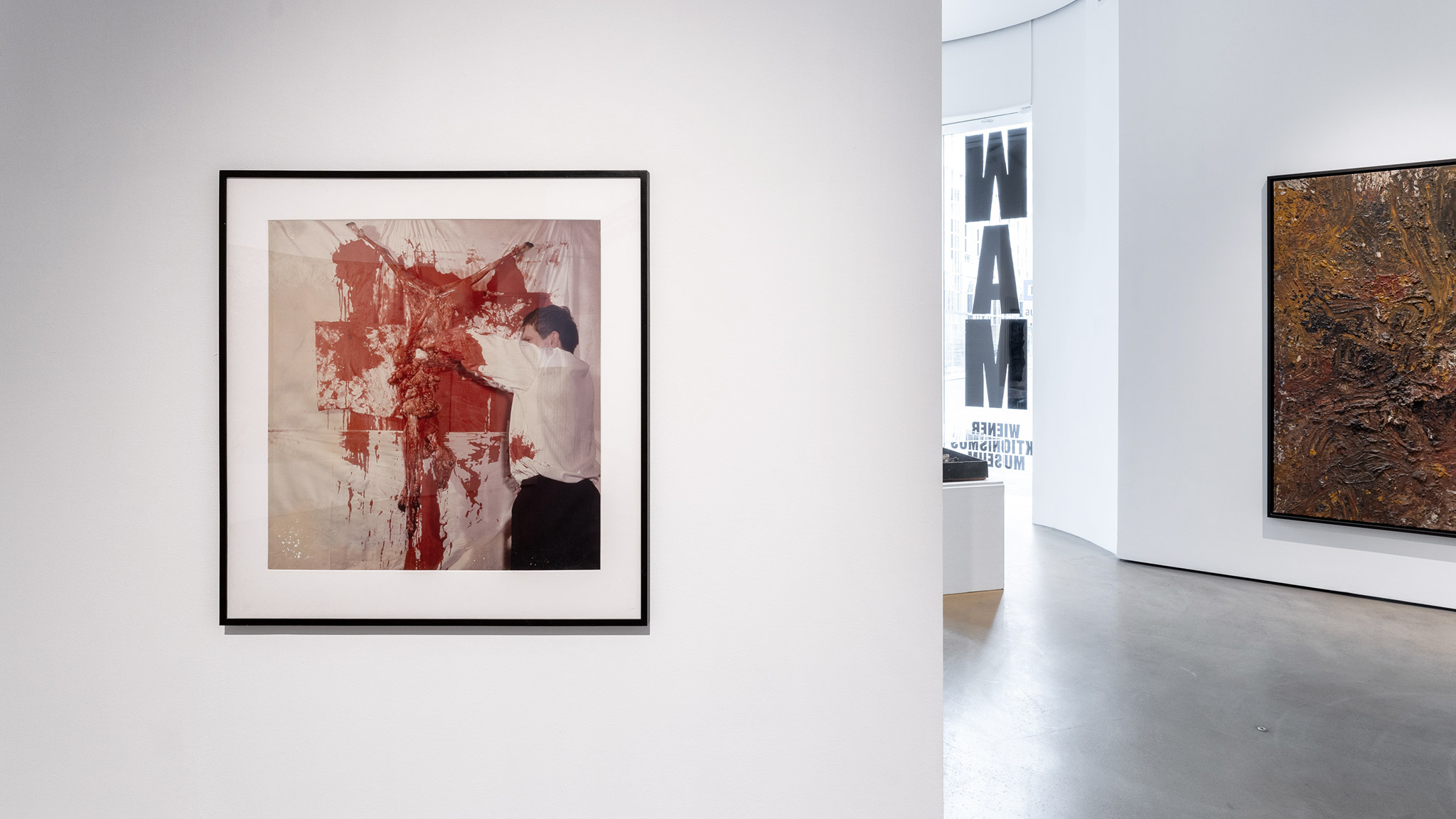


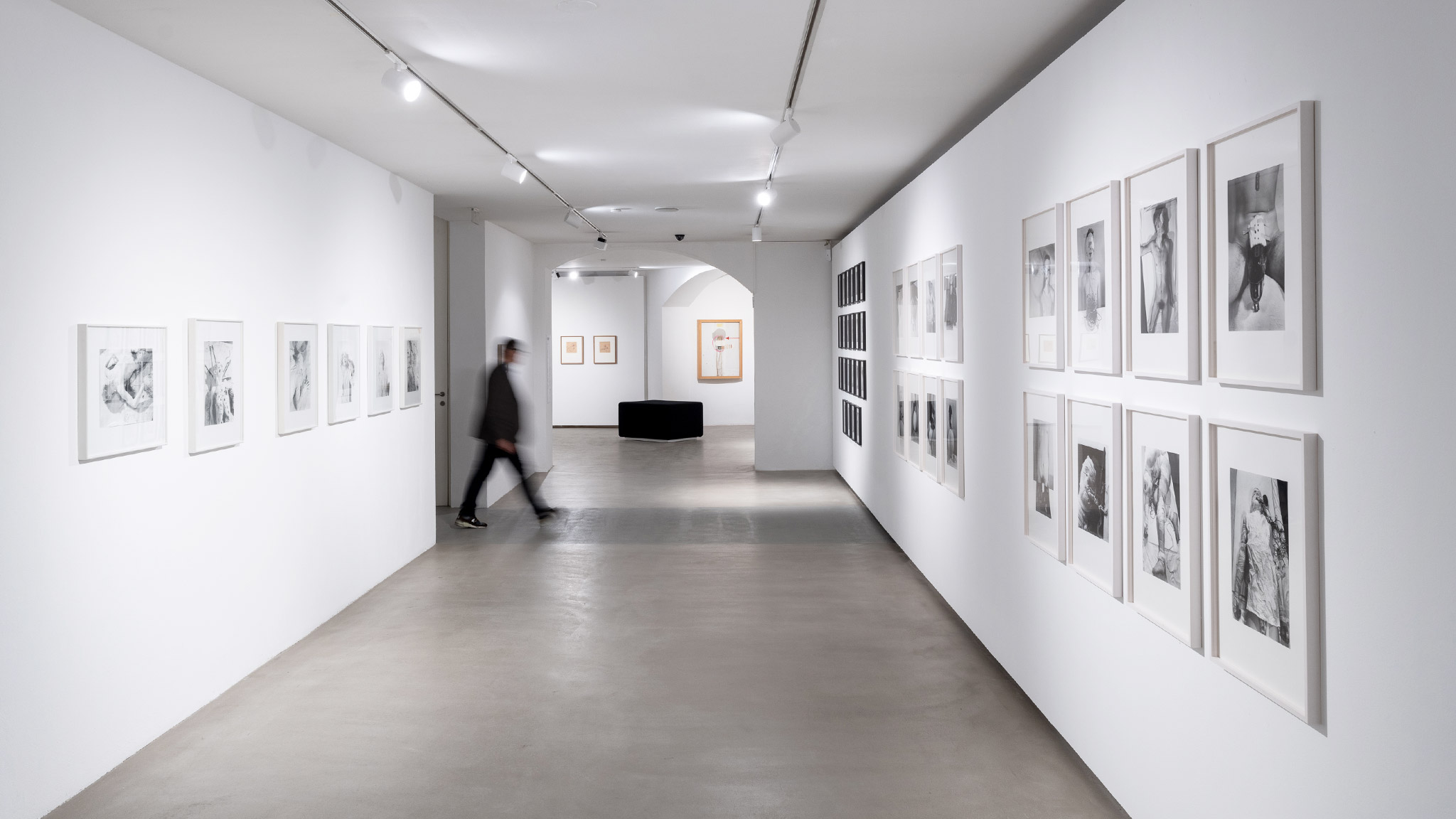
WAS IST WIENER AKTIONISMUS, Exhibition Views, WIENER AKTIONISMUS MUSEUM, 2024, Photos: Manuel Carreon Lopez © Bildrecht, Vienna 2026
The WAM’s opening exhibition offers an in-depth look at the complex and multifaceted developments of Viennese Actionism during its peak in the 1960s.
Seven chapters, which divide the exhibition into several sections, shed light in detail on the most important aspects of what remains, to this day, the most radical art movement of the 20th century.
Four Artists, One Radical Movement
The most important representatives of this movement were Günter Brus, Otto Mühl, Hermann Nitsch, and Rudolf Schwarzkogler. Their central concern was a direct and uninhibited engagement with sensory and psychological experiences in an artistically intensified form. To this end, they worked with bodies, objects, and substances in the form of actions in space and time. In doing so, they aligned themselves with international movements such as Pop Art, Nouveau Réalisme, and the Fluxus and Happening movements, which brought concrete reality back into the realm of artistic creation after abstraction had previously dominated.
From Painting to Performance
All four artists began as painters and moved beyond panel painting by using an increasingly diverse range of materials and incorporating objects, before ultimately abandoning these in favor of performances. They did not view this as a rejection of painting, but rather as a new, expanded form of it, in which they never abandoned their pictorial thinking. In terms of content, Viennese Actionism focused on the human body and the psyche. This included bodily functions that are socially taboo or even ostracized, such as urination, defecation, or sexuality, as well as unconscious or repressed psychological drives and (primitive) fears, such as aggression, destruction, and the fear of injury or death. The artists viewed this as an act of raising awareness, but also as a rebellion against social constraints and mechanisms of repression.
Psychoanalysis and Catharsis
This was rooted in the theories of psychoanalysis, which the Actionists explored in depth—particularly those of Sigmund Freud, C. G. Jung, and, in Muehl’s case, Wilhelm Reich. The central concerns of abreaction and catharsis as means of releasing, overcoming, and eliminating pent-up drives also stemmed from psychoanalytic ideas. All four sought to achieve purifying and healing—that is, therapeutic—effects through their art.
In this way, Viennese Actionism responded to the sociocultural situation in postwar Austria, which was characterized by pronounced conservative values and in which the need to confront the country’s role as part of Nazi Germany had long been suppressed.
Curators:
Eva Badura-Triska
Julia Moebus-Puck
Weihburggasse 26
1010 Vienna, Austria
Tuesday to Sunday
11.00 am – 6.00 pm
Closed on Mondays
Single ticket: €13.00, reduced €10.00
Reduced Admission
Available to visitors aged 65 and over, students, apprentices, people performing civil or military service, and people with disabilities
Free Admission
Children and young people under 19, Kulturpass holders, and ICOM members
€5 in addition to the regular museum admission
Book a guided tour
Public transport:
U1 (Stephansplatz)
U3 (Stubentor or Stephansplatz)
U4 (Stadtpark)
Linie 2 (Weihburggasse)
3A (Riemergasse)
Parking:
Please note that parking spaces at the building are extremely limited. There is a multi-storey car park within walking distance of the museum.
